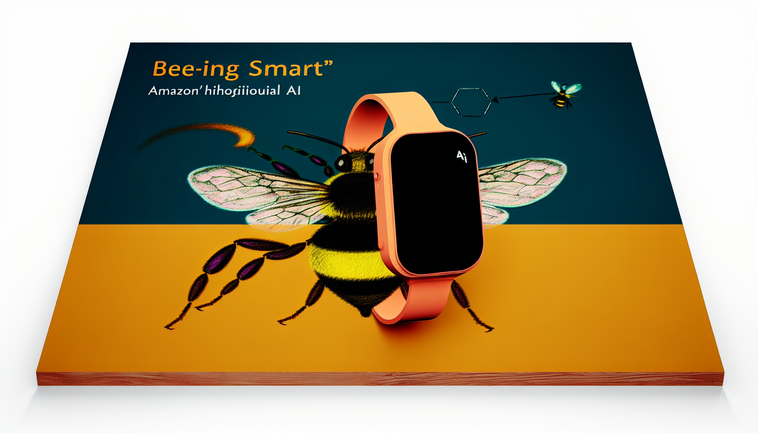
When I first strapped on Bee, Amazon’s latest attempt at an AI wearable, I was struck by how lightweight and unobtrusive it feels. Rather than a hefty smartwatch, Bee leans into minimalism, hinting at a future where our devices blend into clothing and accessories. The initial setup was smooth, and within minutes I was ready to explore its promise of always-on assistance.
The interface relies heavily on voice prompts and subtle vibrations, with only a small LED ring indicating status. I found the haptic feedback surprisingly precise, guiding me through notifications without resorting to a bulky screen. Even in a crowded café, Bee picked up my queries crisply and discreetly, reinforcing Amazon’s goal of hands-free convenience.
Yet at this stage, Bee feels more like a concept in motion than a polished tool for power users. Core capabilities—timers, reminders, basic translation—work well, but advanced AI tricks like real-time language transcription or personalized coaching remain out of reach. It’s clear Amazon is gauging interest before rolling out a richer feature set.
Under the hood, Bee taps into Amazon’s cloud services to process requests, which translates to occasional pauses when the connection wavers. Onboard intelligence is limited, so offline utility is modest. But this hybrid approach also means Amazon can push updates and fine-tune algorithms remotely, giving Bee room to grow without forcing owners to buy new hardware.
Looking ahead, Amazon has teased upcoming tools for developers to craft custom skills, as well as deeper integration with smart home gear and third-party apps. I’m particularly intrigued by the prospect of context-aware alerts, where Bee could suggest inventory replenishments or adjust lighting based on my schedule—all without touching my phone.
Compared to existing wearables, Bee carves out a niche focused entirely on subtle assistance rather than full-blown health tracking or entertainment. It won’t replace a fitness band or a smartwatch loaded with apps, but it could slot into routines that prize quick interactions and ambient computing. In my tests, it excelled at background tasks and gentle nudges.
Overall, while Amazon’s Bee is not yet a powerhouse for professional use, it represents an intriguing first step toward a more ambient AI experience. Its current abilities offer a taste of tomorrow’s hands-free lifestyle, and I’m eager to see how new updates unlock deeper smarts. In the evolving landscape of wearable technology, Bee reminds us that sometimes the most significant leaps come from the smallest, most seamless devices.