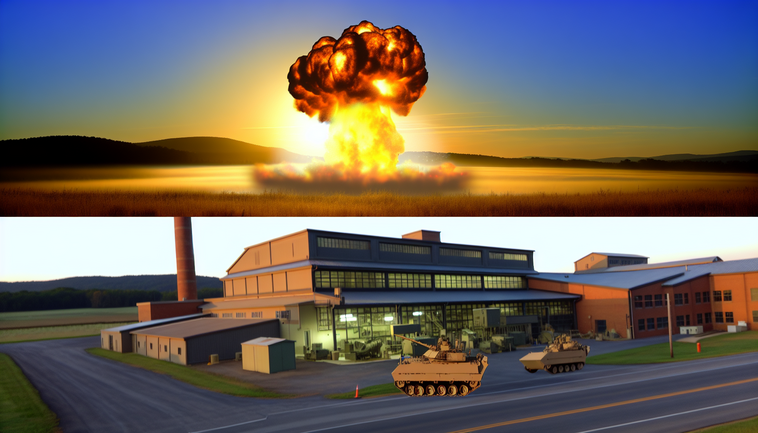
When dawn arrived in eastern Tennessee on Friday, the routine hum of machinery at a military explosives plant gave way to a thunderous detonation, shattering windows and alarms across the region. The blast not only reshaped the facility’s perimeter but also set communities on edge, prompting urgent questions about safety protocols and risk management at critical infrastructure sites.
In the wake of the explosion, nineteen personnel remain unaccounted for and their fates uncertain. Local families grapple with agonizing waits and fragmented information, while emergency crews sift through debris in a race against time. This human toll underscores the precarious balance between rapid production of defense materials and the imperative to safeguard every life involved in the process.
Meanwhile, for the first time in recent memory, National Guard units patrolled the streets of Memphis under a visible security posture. Their presence speaks to a broader concern about public order and rapid response amidst civil unrest—an evolution in domestic deployment that invites debate over the militarization of local law enforcement and the messages such actions send to citizens.
On the academic front, the Massachusetts Institute of Technology made headlines by rejecting a White House proposal to align its research agenda with directives from the Trump administration. This refusal illuminates a growing rift between federal authorities seeking greater influence over university laboratories and institutions determined to maintain independent scientific inquiry without political strings attached.
These moments of upheaval—whether on factory floors or in university boardrooms—underscore the intricate ballet of governance, safety, and institutional autonomy in contemporary America. They prompt us to consider how risk is managed across diverse arenas, from national defense sites vulnerable to accidents, to cities facing social stress, to campuses defending intellectual freedom.
Collectively, these stories reveal a nation navigating dual imperatives: upholding public safety and preserving essential liberties. The Tennessee explosion raises alarms about industrial oversight, the Memphis deployment spotlights the boundaries of state power, and MIT’s stance champions the principle that scholarship should remain above partisan agendas.
As communities sift through wreckage, as soldiers stride through city blocks, and as academics stand their ground, we are reminded that resilience emerges at the confluence of crisis and conviction. Our capacity to rebuild, to debate freely, and to ask hard questions will define how effectively we address the challenges ahead.