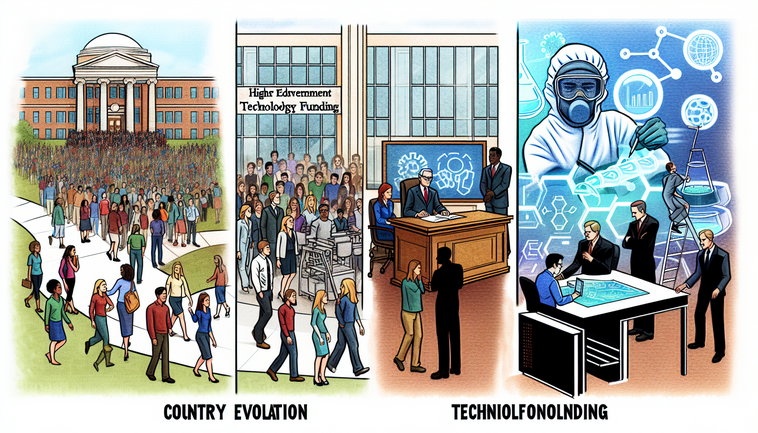
In recent weeks, a trio of developments spanning higher education, government technology funding, and biotechnology have painted a dynamic picture of a country in transition. On one front, political leaders are reshaping campus priorities, while on another, federal dollars are jumpstarting self-driving cars and artificial intelligence. Simultaneously, pharmaceutical companies are locked in a fast-paced contest to lead the next wave of metabolic treatments.
Former congressman Sean Duffy has become a galvanizing voice in the movement to roll back diversity, equity, and inclusion programs on university campuses. Framing these initiatives as distractions from core academic missions, he argues that removing them will foster merit-based environments. Critics counter that eliminating such frameworks risks sidelining underrepresented voices and undermining efforts to make higher education more inclusive.
In parallel, the Trump administration has announced a $33 million investment aimed at accelerating autonomous vehicle research and AI development at institutions across the country. Supporters contend that targeted grants will position America at the forefront of a technological revolution, driving both economic growth and safety innovations in transportation. Skeptics question whether the funding is sufficient to overcome regulatory hurdles and hardware costs inherent in these cutting-edge endeavors.
Viewed together, the drive to dismantle campus DEI structures and the push to bankroll advanced mobility research reflect a broader ideological shift toward competition and deregulation. By favoring individual achievement over collective initiatives, policymakers are staking a claim on how public funds should advance national goals, whether in cultivating young minds or engineering the next generation of autonomous machines.
Meanwhile, in the pharmaceutical arena, Novo Nordisk initially sprinted ahead in the race to develop GLP-1-based therapies for metabolic diseases, leveraging early clinical successes to build market momentum. However, recent data releases and supply challenges have allowed competitors like Pfizer to close the gap. By tweaking dosage protocols and expanding manufacturing capacity, Pfizer aims to challenge the incumbent’s dominance and redefine treatment benchmarks.
Despite unfolding in disparate sectors, these narratives share a common thread: a relentless quest for leadership in arenas of influence. Whether it’s shaping campus culture, steering the future of AI-driven transport, or winning a biotech sprint, entities large and small are vying for a strategic edge. Government policy, private innovation, and public perception all play pivotal roles in determining who ultimately comes out on top.
As these currents converge, stakeholders must navigate a delicate balance between encouraging innovation, ensuring equitable access, and maintaining accountability. Absent thoughtful oversight, rapid change can exacerbate social divides or create regulatory blind spots. Yet, with collaborative frameworks and agile problem-solving, it’s possible to harness these shifts to build a more inclusive, technologically advanced, and health-conscious society.