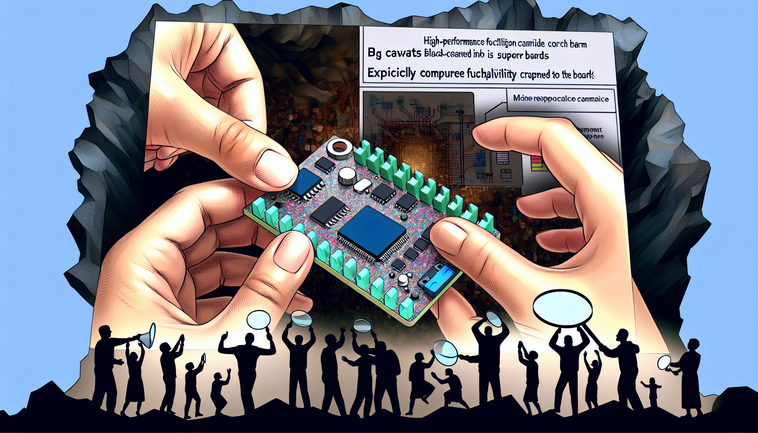
In the rush to squeeze more performance into ever smaller hardware, hobbyists and professionals alike have flocked to diminutive microcontroller modules. The ESP32-C3 Super Mini boards, barely larger than a thumbnail, promise Wi-Fi, Bluetooth, and a powerful RISC-V core in one tidy package. But a recent discovery reveals that some of these boards ship entirely without onboard flash memory—a detail that can derail even the most seasoned maker.
Flash storage serves as the bedrock of embedded development. It houses your compiled firmware, retains configuration parameters, and even hosts tiny file systems. Without it, a microcontroller cannot autonomously store or execute your code. While manufacturers sometimes omit flash chips to hit a cost or size target, the trade-off isn’t always obvious until you’re knee-deep in a debugging session.
Flash-less variants of the ESP32-C3 can’t load firmware straight off the board. Instead, they rely on an external SPI flash or a serial programming approach every time you power up. For quick prototypes, this might seem a harmless inconvenience, but it fundamentally changes how you integrate the module into a final product. What’s advertised as a self-contained unit suddenly requires extra wiring and an external memory chip.
The practical repercussions are significant. Overnight reboots become cumbersome without persistent storage, development workflows slow down, and firmware updates force you to juggle additional hardware. In battery-powered or space-constrained designs, the need for an external flash module not only eats into precious real estate but can also introduce unexpected power draw and signal-integrity challenges.
I’ve witnessed a team scrap a week of work when they discovered their new C3 minis refused to retain a simple GPIO toggle routine after unplugging the development rig. By the time they realized the flash chip was missing, the deadline pressure had already mounted. This sort of pitfall highlights the importance of scrutinizing specs and verifying component lists before ordering a batch of boards.
From my perspective, it’s essential to adopt a checklist mentality: always confirm the presence and capacity of onboard flash, or plan for an external memory solution up front. When possible, work with suppliers who clearly label flash-less variants and offer modules with solder-down or castellated pads for easy expansion. For mission-critical applications, err on the side of a slightly larger form factor that guarantees non-volatile storage.
Ultimately, the lesson here is that in the realm of embedded systems, tiny footprints can hide big limitations. Flash-less ESP32-C3 Super Mini boards might seem like a steal, but the hidden costs in development time, reliability, and hardware complexity can outweigh any initial savings. Approach these micro marvels with caution, and always read between the lines of a spec sheet before committing to a production run.