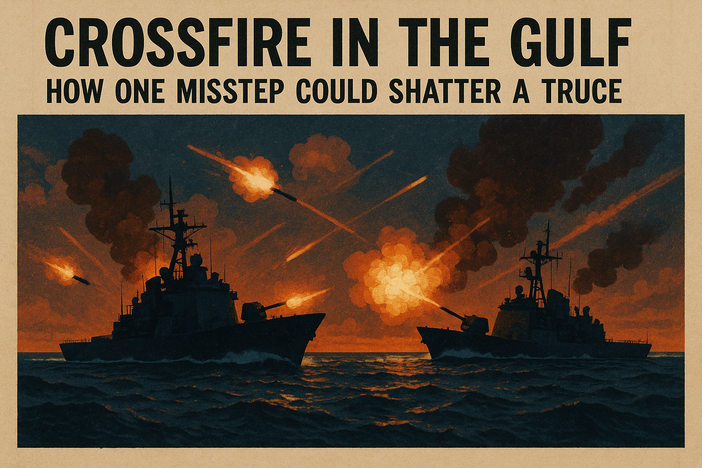
Late last night, a series of strikes in the waters off the Gulf Coast reignited tensions that many hoped had cooled. Neither side claimed major damage or casualties, yet the exchange of fire serves as a stark reminder that the recent lull in hostilities remains precarious. What began as a fragile agreement to pause aggressive maneuvers now hangs in the balance after this sudden flare-up.
The ceasefire, brokered only days ago, was more of a temporary detente than a lasting solution. Negotiators on both sides acknowledged that deep strategic and ideological divides still drive much of the conflict. Even so, regional leaders and global powers pinned cautious optimism on this brief window of calm, hoping it might expand into meaningful dialogue.
Eyewitnesses reported that the clash involved fast boats launching projectiles toward a naval escort vessel, which in turn responded with warning shots. No fatalities have been confirmed, but each side’s choice to fire signals a clear unwillingness to cede control of key maritime routes. The littoral waters of the Gulf have long functioned as a poker table where every move invites a counter-move.
From Tehran’s perspective, demonstrating resolve on the water bolsters the government’s portrayal of itself as a regional defender against external pressure. By contrast, Washington and its allies are keen to display unwavering deterrence, insisting that any attack on commercial or military vessels will be met with precise reprisals. This back-and-forth illustrates a classic security dilemma, where each side’s quest for safety inadvertently fuels mutual suspicion.
It’s possible to read this skirmish as a calculated signal rather than an all-out challenge. For Iran, limited engagement allows authorities to placate hardliners at home without provoking a full-scale confrontation. For the United States, showing a firm hand in defense of free navigation underscores its commitment to allies and deters future assaults. Yet these tactical gains come at the cost of narrowing diplomatic room for maneuver.
The wider implications of any breakdown in maritime calm extend far beyond regional capitals. Traders watch shipping lanes for signs of disruption, and insurance rates for tankers have already ticked upward since news of the incident surfaced. A shift toward open conflict could drive global energy prices higher, strain fragile economies, and draw in additional powers eager to protect their interests.
Ultimately, this episode underscores that ceasefires are only as strong as the political will sustaining them. The recent volley of fire should serve as a wake-up call for all parties to recommit to dialogue, establish clear communication channels, and involve neutral mediators. Without a renewed focus on resolving underlying tensions, the Gulf risks slipping back into a cycle of escalation—one misstep away from a broader conflagration.