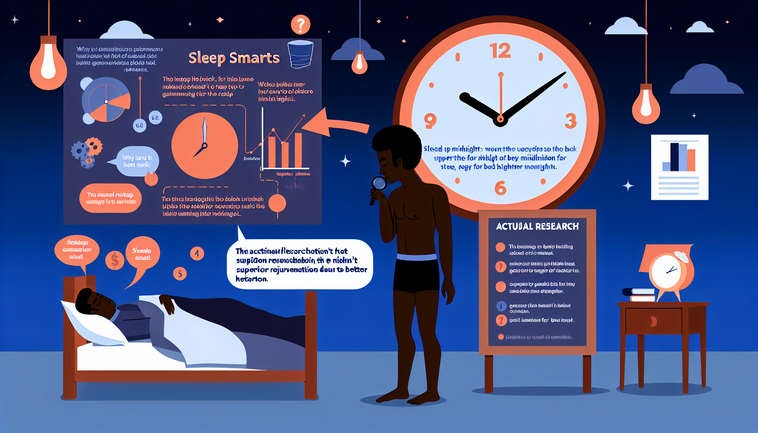
We’ve all heard that sleeping before the clock strikes twelve yields superior rejuvenation. Countless articles and casual advice reinforce the idea that those first evening hours are twice as restorative as those after midnight. Yet a seasoned sleep specialist recently dispelled this notion, reminding us that clock time alone doesn’t dictate how well we rest.
According to leading sleep experts, the true drivers of restorative sleep lie in how consistently you go to bed, how long you stay asleep, and how smoothly you move through each sleep stage. Whether you drift off at 10 PM or 1 AM, what really counts is achieving adequate total sleep time and aligning with your natural body rhythm.
From my perspective, it’s easy to get sidetracked by catchy soundbites about “golden hours” of sleep. In reality, metrics like time spent in deep slow-wave sleep and REM sleep hold more weight than the hour you fall asleep. The body pursues a predictable cycle of light, deep, and REM phases, regardless of what the clock reads.
Tip 1: Lock in a consistent schedule. Choose a bedtime and wake-up time that you can stick to every day, even on weekends. Over time, your internal clock—your circadian rhythm—will synchronize, making it easier to fall asleep quickly and wake up feeling refreshed.
Tip 2: Create a wind-down routine. Dedicate the 30 to 60 minutes before sleep to calming activities such as reading, gentle stretching, or deep-breathing exercises. Limiting screens and bright lights during this period can help signal to your brain that it’s time to transition into rest mode.
Tip 3: Optimize your sleep environment. Aim for a cool, dark, and quiet bedroom. Consider blackout curtains, white-noise machines, or earplugs if needed. A comfortable mattress and pillow tailored to your preferred sleep posture will support healthy spinal alignment and overall comfort.
Ultimately, breaking free from the midnight myth allows us to focus on what truly enhances rest: total sleep time, routine, and environmental factors. By tuning in to your own body’s signals rather than a generic bedtime, you’ll pave the way for more consistent, high-quality sleep—no magic hour required.